
Introducing Tidy Minds
A new mental health initiative for busy self- employed people
We’re thrilled to welcome Melinda Messenger – Psychotherapist, Broadcaster & Wellbeing Advocate as our official Tidy Minds Mental Health Ambassador.
We know that running a business alone is tough – mentally and emotionally. The Tidy App is designed to help people reclaim time and reduce stress, but our vision goes beyond simplifying admin. We recognise that the mental health impact of self-employment extends far deeper.
So with Melinda’s expertise, we’ve created Tidy Minds, our new initiative designed to highlight mental health challenges in the self-employed community and to build a space for connection, support and helpful conversations.

Melinda Messenger
Why we’ve created Tidy Minds
Nearly half of self-employed professionals report feeling isolated, overwhelmed, or stressed by the pressures of managing a business alone. Late payments, inconsistent income, admin overload and long working hours can all contribute to anxiety, burnout and declining physical and mental health.
Through interviews, articles, online events and video content, Melinda will open up conversations about:
- Dealing with stress and overwhelm
- Maintaining work–life balance
- Managing financial uncertainty
- The emotional realities of working for yourself
- How simple routines can transform wellbeing
- The benefits of community, and much, much more!
Hello, lovely people,
I’m really honoured to be the Mental Health Ambassador for the new Tidy Minds initiative dedicated to supporting the wellbeing of self-employed people – it’s a subject close to my heart.
As someone who is self-employed, had a variety of roles – from TV to psychotherapy – I know how deeply our work can affect our mental and emotional health. Working for yourself can be incredibly rewarding, but it also brings pressures that many people don’t see: long days, financial uncertainty, isolation, and the constant juggle of keeping everything going on your own.
So I’m here to shine a light on the struggles many of us self-employed people face. Through Tidy Minds, we’ll be sharing conversations, guidance and practical tips designed to help you look after your mental health, while navigating the ups and downs of self-employed life. And we’ll be building a community that reminds you that you’re not alone and that support is available.
With love, Melinda
A welcome message from Melinda
Why Tidy Minds matters
Stay connected and stay tuned to Tidy Minds
Tidy Minds will be rolling out new content, resources and events throughout 2026.
Watch. Share. Support.

Spring reset
There’s something about spring that feels like a beautiful opportunity to reset. As our daylight hours get longer, our energy levels increase… so it’s often a good time to reflect on how you’re really doing – not just in your business, but in yourself. Because of course these two things are linked more than we think!
When you’re self-employed, your nervous system is actually one of your greatest business assets – but it’s impact is often under estimated or neglected. It affects how clearly you think, how you make decisions, how you respond to clients, and how creative and productive you feel. But, most of us may only notice our nervous system when things start to go wrong.
So this month, instead of asking yourself how you can do more… start with noticing how you feel. Because when your nervous system is calm, productivity and creativity follows.
Understanding your nervous system at work
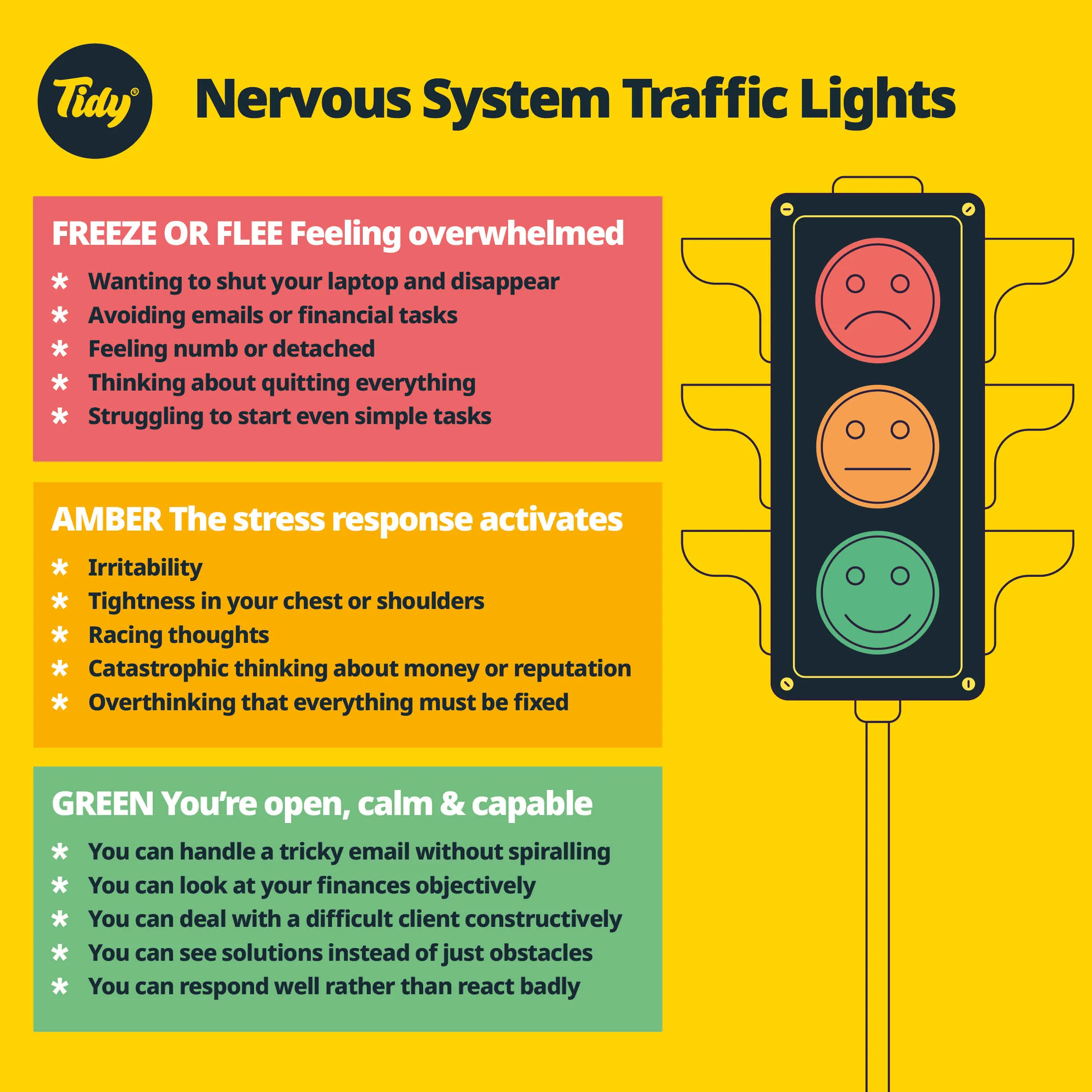
One of the most powerful things we can learn as self-employed people is how to recognise the state of our own nervous system, because this is central to our wellbeing, and our wellbeing is central to how we perform and operate on a daily basis. Your state of mind shapes your decisions, your tone, your creativity, your confidence and your resilience. I use a very simple way of understanding how our state of mind affects us – a traffic light system.
🟢 Green: Open, calm, capable. Ideallygreen is where we want to be most of the time. In this state, your nervous system feels safe and so you’re mind is open – you can think clearly and solve problems. You’re able to respond rather than react:
- You can handle a tricky email without spiralling
- You can look at your finances objectively
- You can have a constructive conversation with a difficult client
- You can see solutions instead of just obstacles
🟠Amber: The stress response activates This is where many self-employed people spend more time than they realise. Late payments, difficult clients, a drop in enquiries, unexpected expenses cause your nervous system to activate. This is the beginning of fight or flight – your body is preparing for threat, which is not helpful when you’re trying to make thoughtful business decisions. You may notice:
- Irritability
- Tightness in your chest or shoulders
- Racing thoughts
- Catastrophic thinking about money or reputation
- A sense of urgency that everything must be fixed immediately
🔴Red: Freeze or flee In this state the nervous system feels overwhelmed and you are not thinking strategically. This can look like:
- Wanting to shut your laptop and disappear
- Avoiding emails or financial tasks
- Feeling numb or detached
- Thinking about quitting everything
- Struggling to start even simple tasks
Steps you can take...
“The first step is simply to pause and ask yourself, What state am I in right now? Naming whether you’re in green, amber or red immediately creates a little space between you and the reaction. From there, focus on calming the body before trying to solve the problem. Slow your breathing, step outside for five minutes, maybe go for a walk. When the physiology settles, your thinking will follow.
If you’re feeling overwhelmed, see what you can do to reduce the load. Shorten your to-do list to the absolute priorities. Delay a difficult reply. Separate the facts from the catastrophic story your mind may be creating. Very often, it’s the story that pushes us into red – not the reality.
Best of all – don’t wait for a crisis to notice your nervous system. Build small moments of green into your week – space between meetings, protected focus time, proper breaks. Regulation isn’t a luxury, it’s what allows you to run your business with focus and steadiness.”
With love & support, Melinda

The hidden challenge of working alone
One of the wonderful things about being self-employed is the independence it brings. You can shape your work around your life, make your own decisions, and build something that truly reflects who you are.
But there is another side to working for yourself that isn’t talked about as often – isolation.
When you run your own business, you often carry everything on your own shoulders. There may not be colleagues to talk things through with, no shared office conversations, and no one sitting nearby when something goes wrong. Over time, this lack of connection can take its toll.
As human beings, we are wired for connection. Our nervous systems regulate through relationships. When we feel supported and understood, our bodies settle and our minds become clearer. But when we’re isolated for long periods, especially while under pressure, our thoughts can start to spiral.
Problems that might be manageable when shared can begin to feel overwhelming when we’re dealing with them alone. Financial worries, difficult clients, uncertainty about the future – these challenges can grow much larger in our minds when there’s no one to share the load with.
Sometimes simply speaking openly with someone we trust can bring immediate relief. Other times, professional support can provide the perspective and tools we need to move forward more calmly and confidently. The important thing is to recognise that connection supports our wellbeing. Reaching out is a healthy response to the reality of carrying a lot on your own.
Steps you can take...
“Here are a few ways to reduce isolation and support your mental wellbeing when you work for yourself…
Talk to someone you trust
Sharing your thoughts with a friend, partner, mentor or fellow business owner can quickly change how you view an issue. Getting another perspective to a stressful situation can be invaluable.
Connect with other self-employed people
Whether through networking groups, online communities or local meet-ups, connecting with others who understand the realities of self-employment can be incredibly reassuring and rewarding.
Notice when problems feel bigger than usual
If worries start to feel overwhelming or you find yourself going round and round in the same thoughts, it can be a sign that you’re carrying too much on your own.
Seek professional support when you need it
Therapists, counsellors and coaches can provide a safe space to talk things through and help you find practical ways to manage stress and uncertainty. See below for some helpful resources.
Build connection into your routine
Running a business on your own doesn’t mean you have to face everything alone. Even small regular check-ins with people you trust can make a huge difference to how supported you feel.”
With love & support, Melinda
Rest & reset
When you’re self-employed or running your own business, rest can feel like a luxury you can’t afford. There’s always another email to answer, another job to finish, another invoice to chase, and perhaps the worry about money or deadlines sitting quietly in the background.
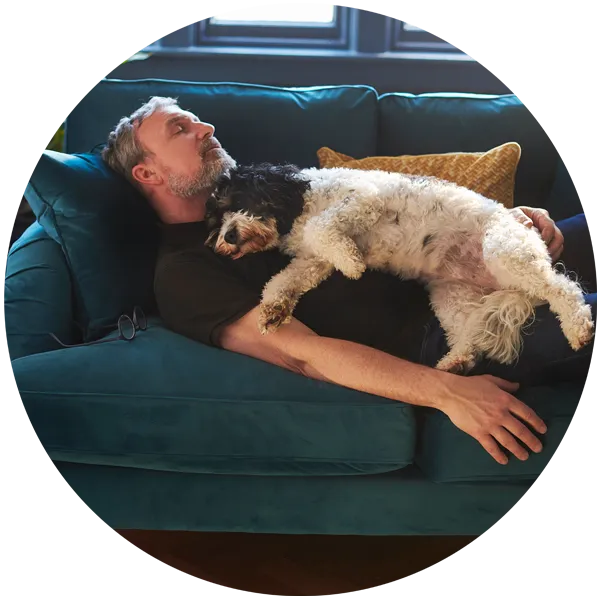
But one of the most important things we must always remember is that rest isn’t laziness. It’s regulation.
Our nervous systems are not designed to stay switched on all the time. When we’re constantly pushing, problem-solving and carrying responsibility, our bodies stay in a heightened state of alert. Over time this can lead to irritability, anxiety, exhaustion, and that familiar feeling of always being slightly overwhelmed.
Rest allows the nervous system to reset and return to balance. When we pause, slow down and step away from constant activity, the body begins to move back into a calmer, more regulated state. From there, our minds become clearer, our creativity returns, and solutions that once felt impossible often start to appear.
Ironically, rest often makes us more effective, not less. When we allow space for recovery, we come back to our work with greater focus, perspective and resilience. So learning to build moments of rest and reset into your day is not a weakness. It’s a skill — and one that protects both your wellbeing and your business.
Steps you can take...
Here are a few simple ways to support your nervous system and allow more rest into your working life…
Create small pauses between tasks
Instead of moving straight from one job to the next, try allowing a few minutes in between. Even a short pause helps the nervous system settle before you begin again.
Step outside whenever you can
A short walk, a breath of fresh air, or simply standing outside for a moment can help shift your body out of stress mode and bring a sense of calm.
Make rest intentional
Rest doesn’t have to mean stopping for hours. It might be ten minutes with a cup of tea, a quiet moment away from your phone, or simply closing your eyes and taking a few slow breaths.
Notice the signs of overload early
Feeling foggy, irritable or constantly rushed are often signals that your nervous system needs a break. Responding early is far kinder to yourself than pushing through until you’re exhausted.
Allow yourself to switch off
When the working day ends, try to finish it intentionally. Close your laptop, shut your office door, change out of your work clothes. Your mind and body need periods where they are not thinking about work in order to properly recover.
Running a business requires energy, creativity and resilience. Those things don’t come from constant pressure – they come from a balanced nervous system.
So if you take a break today, step away from your screen, or give yourself permission to rest, remember this:
You’re not being lazy.
You’re looking after the system that allows everything else to work.
With love & support, Melinda
Useful resources
There is always help at hand
Looking after your mental wellbeing is important – and support is available.
Below are trusted UK organisations offering information, tools and confidential support if you need it.
If someone is in immediate danger or at risk of harming themselves or others,
call 999 or go to the nearest A&E immediately.
Useful resources
Mind – Information, guidance and local support for a wide range of mental health issues.
https://www.mind.org.uk/
NHS Mental Health – Official gateway to NHS mental health services and self-help guidance.
https://www.nhs.uk/mental-health/
NHS Talking Therapies – Free NHS support for anxiety and depression (England).
https://www.england.nhs.uk/mental-health/adults/nhstalking-therapies/
Hub of Hope – National database of UK mental health charities and support services.
https://hubofhope.co.uk/
Helplines & Immediate Support
Shout – Free, confidential 24/7 text support for anyone struggling with their mental health.
https://giveusashout.org/
Text SHOUT to 85258
Mind Mental Health Helplines – Helplines covering a range of needs (info and support).
https://www.mind.org.uk/information-support/guides-tosupport-and-services/seeking-help-for-a-mental-healthproblem/mental-health-helplines/
Samaritans – Confidential emotional support available 24/7.
https://www.samaritans.org/
Call 116 123 (UK)
Specialist Charities & Community Support
Anxiety UK – Support, information and resources for people experiencing anxiety.
https://www.anxietyuk.org.uk/
Rethink Mental Illness – Advice, community services and support for people living with mental illness.
https://www.rethink.org/
Kooth – Online wellbeing community offering anonymous, free peer support.
https://www.kooth.com/
Togetherall – Safe, anonymous online community for emotional support.
https://togetherall.com/en-gb/
Support for Young People
YoungMinds – Information and support for young people and parents.
https://www.youngminds.org.uk/
The Mix – Free support (online, chat, email) for under-25s.
https://www.themix.org.uk/
Urgent & Crisis Support
NHS 111 (Mental Health option) – Call 111 anytime (select mental health option) for urgent support across England.
https://www.nhs.uk/nhs-services/urgent-and-emergencycare/nhs-111/
Local Crisis Teams – NHS local crisis services (via NHS 111 or local trust sites).
Take control of your business with Tidy
The Tidy App is designed to address common challenges faced by self-employed and tradespeople, offering a tech-savvy way to manage your business admin, fast and secure ways to accept payments, and convenient ways to manage your cash flow. We even offer a more streamlined accounting process with a FREE QuickBooks account included.
Tidy offers busy self employed professionals a suite of digital business tools designed to take the hassle out of daily admin tasks, so that you can focus on what you do best – your trade.